Turning Thirty and Getting the Hell Out

Today is the day of my birth. I expect (though I do not know) that it will be spent mostly in improvised chaos, and I'm looking forward to it. Friends are here to see me, to celebrate together, and my sister has taken the reigns in planning whatever goes on. I virtually ignored my birthday last year, and these feels like making up for lost time in more ways than one.

But tomorrow I leave for Italy for a two-week trip, and some things are just begun. For those two weeks, I'll have limited access to interblogginet, but plan to keep writing entries and saving them to my thumbdrive, uploading them as I come across internet cafes where I can actually speak enough Italian (or they enough English) to buy time. (Buying time?) So they'll not be dated properly by Blogger; look for the in-text date.

The beauty of time, I suppose, is that it goes on no matter what. I'm grateful for it, however it may age me. It gives the motion and the pauses meaning, and lets friends know how long they've been.

And it gives me an excuse, just for a moment, to be sappy on ma 'blog.

Showers later tonight, with a 100% chance of Brainstorms...

I'm thinking about that

unCommon Cause

assignment today, and you lucky ducks will receive the benefits of my brainstorming fragments. Feel free to comment with . . . er . . . comments. Yeah. Just bear in mind this is essentially free-writing (unlike the rest of the 'blog, the which is meticulously planned out months in advance).

* * *

Moment:

Five men stand on stage with their backs to us. All of them wear strange, black hoods that cover their faces but leave their jawlines exposed. At the sound of a sudden gun battle, the four to the sides scatter in different directions and disappear offstage. The battle sounds fade very slowly, the central figure remaining silent and still. There is a long moment of silence, long enough to invite a certain relaxation. Suddenly, a single gunshot, loud enough to startle. The man onstage doesn't flinch, doesn't seem to move. Gradually we begin to realize, however, he is moving. Extremely slowly, smoothly [

Butoh

/

Suzuki

slow], the man is collapsing to his knees, then his face, as if shot in the back of the head. It takes a good minute before he is still, face-down on the floor, head turned to the left. After a short moment, Captain Evans enters in formal dress. Unphased by what she sees, she advances to the body and begins examining it. After some time it becomes clear she is trying to view the obscured face. She can not see it, so she rolls the body over, which responds as if lifeless. She stands over the face, still obscured by a partial hood, and still, she can determine nothing. She sighs, takes the body's right hands and helps it to its feet. Once on its feet, the body does a smart salute to her, then about-faces and marches off stage. She turns to the audience and speaks:

"Inconclusive."

She closes her eyes. Her whole body shifts downward subtly in relaxation. Suddenly she gasps, her eyes fly open and her hands reach out, as if waking suddenly.

* * *

Hypothetical scene:

EVANS: Lieutenant Colonel Ainsley.

AINSLEY: Major Evans.

E: It's good to see you again, sir.

A: And you. Major. How was your tour?

E: About as brutal as they come, sir.

A: I'm sorry to hear that.

E: Don't be. It means I'm glad to come home, sir.

. . .

A: Patricia-

E: Sir, have you maintained contact with them?

A: At ease already-

E: Have you, sir?

. . .

A: I thought you didn't want any more news from Bethel.

E: I haven't asked for any, sir.

A: I get regular updates on their status and all major military decision-making regarding the family of Specialist Larkin still has to pass over my desk. But that kind of thing comes around less and less. And no, I haven't maintained contact with them, Major. It was agreed that would be confusing given your transfer.

We

agreed on that, as I recall.

E: Yes. We did.

A: They're all right.

E: I don't want to know. Really, Bill. I just wanted to know that they're still . . . that they're still there.

A: They are. They are.

E: Fine.

A: Is that all, Major?

E: If that's all, sir.

A: (

Relenting.

) Then you're dismissed.

E: Thank you, sir.

. . .

E: We're lucky they didn't destroy themselves over it, sir. We didn't belong there, but we had to be there. I remember sifting through hate mail directed at us, at this government, arriving in their PO box, weeding out anything that might crack Carolyn further or send Ed off on a rampage. After a while, it was easy to start to listen to those letters, those emails, those strangers at the end of a phone line and understand that they weren't telling us to get out of Iraq. They were telling us to get out of that house, that town. That family. I didn't leave because I loved them. I left because I had to, because they loved me. And I shouldn't have been there. . . . Sir.

* * *

WELL. I sure do seem to be loving the Evans action with this work, don't I? Didn't really explore any connections between her and Jake, and didn't necessarily create anything usable in the play as it stands. Still, that's part of the fun of all this work. Everything goes into the group mind (which I like to think is at least somewhat different from a hive mind) and one never knows when one will meet it again down the creative road.

But Mom, I've Got, Like, a Gagillion Hours of Homework...

Keeping with the theme of assignments (see

6/4/07

), today I write to you, most dear reader, about some of the behind-the-scenes work of creating a show from scratch. This, I realize, imperils my ratings (

kicking people in the head

and complaining about

irrepressible sexual urges

, for some unfathomable reason, gets more readership) but it is more in keeping with the purpose of this here 'blog and so I heedlessly hurry onward.

The thing about (okay: only one of the many things about) creating one's own work in a theatrical context is that--at least at the no-to-low-paying level--the creator has to do a lot of work outside the collaborative setting of a kind he or she wouldn't otherwise be doing. I mean, if I'm working on, say,

Rosencrantz & Guildenstern Are Dead

(a totally random example, and not at all a play I am performing voodoo rituals in the hope of being cast in), I will do plenty of work outside of rehearsal. There's the simple line memorization, reading up on the backgrounds of Stoppard, Hamlet, late-1960s theatre, Denmark, absurdism, determinism, Shakespeare, etc., working on any tricks or skills the director may want included, dialect training . . . it goes on and on. A good actor becomes obsessed with his or her role and the world of the play for the time he or she is working on it, and does it all to more thoroughly incorporate his or her self into it all. (Man, but I hate the standing rule about not using "them" or "they" to refer to male or female hypothetical persons. He's got the right idea over at

xkcd

.)

(Parenthetically, [this is the most parenthetical parenthetical

ever

{my boss insists on doing this in her letters: saying "Parenthetically," at the start of something

in parentheses

, no matter how many times I point out it's redundant, and I deserve a medal or ribbon or something for not throwing my keyboard at her head}] I have a giant tape X on my lumbar region today, applied by my physical therapist to remind me to sit up straight and bend--if I absolutely

must

--from the hips. I consider this some kind of oblique revenge by

Anton Chekhov

from beyond the grave for

this post

. Plus it's a sign that my body will actually explode this Saturday when I turn thirty. Parenthetically.)

When you are responsible for building the show from the ground up, however, homework takes on all-new, mammoth proportions. The best example of this I have, to date, is the period of weeks leading up to

Zuppa del Giorno

's debut of

Silent Lives

.

Friend Grey

was directing, and we were all pretty obsessed with the subject matter--silent film characters and actors--so it didn't take much to motivate us to spend all our time building that one. Yet somehow Grey managed to motivate us to spend literally every waking hour working on the show. I mean, we just never stopped. Sleep was watching silent films. Eating was learning the bread dance from Arbuckle cum Chaplin cum

Downey Jr.

and

Depp

(Brits: Please don't censor me for my use of "cum" in this context). It was, to borrow a term, ridonkulous.

As Far As We Know

is not that bad. In fact, we often eat and drink during our table sessions, so it's like the opposite. Except for the assignments, which are

hard

and just keep getting

harder

. I have written about these on past occasion (see

2/28/07

-

3/1/07

) and this last, due by early Saturday, is no exception. The assignment, as comprehended by me, is as follows:

We've been given a bunch of material. Using this material (act one of three and numerous transcripts of interviews with people from Matt's hometown and people of related significance), 1) rewrite or create a new scene far act one, or 2) create a stage "moment" with a piece of text from the interviews, or 3) present your character in an impossible situation, or 4) all of the above.

Now, this kind of assignment is how a great deal of the play got created in the first place, with even less to go on. Sometimes these assignments would be assigned in rehearsal, with ten minutes provided for a group to pull something together. I like working this way. Parameters are fun for me (I like the crunching noise they make as I break them, to paraphrase Douglas Adams). Yet somehow I always stress about these

Joint Stock

/

unCommon Cause

assignments. One I stayed up until two in the morning working on one, blasting

Damien Rice

(like that's a bad thing) and practicing punching holes in paper with my finger. It's a measure, I believe, of how high an esteem I hold my fellow collaborators in. They're all such skilled

and

talented actors and writers and directors that I feel a need to rise to their level, and that feeling is most poignant the night before a presentation.

This one's going in a funny direction for me so far, possibly because it lacks some of the specific parameters the prior ones have featured. I had an initial idea: to explore the similarities between my character (the captured soldier) and

Sara Bakker

's (the casualty assistance officer who ministers to his family). But I didn't then set to an examination of their particular scenes, or even rumination on their respective characteristics. Instead, I got fascinated with this idea of

re

writing a scene that we already had. I began to wonder how the play would read if I had been writing it by myself all along. (The answer, it seems to me, is that it wouldn't read, at least not particularly well. I couldn't have gotten more than few steps with this material by myself, and don't excel at writing naturalistic dialogue.) So what I started doing, quite unintentionally at first, was underlining any dialogue that--out of context--directly addressed the experience of the captured soldier or his family and town.

I have NO idea what I'm going to do with this yet. I have some vague notions involving gathering all these fragments together, finding appropriate music (always my favorite element of the assignments) and perhaps drawing more connections between Sara's character and my own. And that's about it. Tonight, I will sit quietly and let my mind stretch and wander over the raw material, and see what happens. Laundry will be done as well, and packing for Italy. Somehow mundane chores always help with idea flow.

And hopefully, by 2:00 AM, I'll be making props out of defunct coat hangers and leftover moving boxes. This, in the mind of a "

creactor

," is the image of a perfect sort of evening. I'm looking forward to it.

Women of New York: Kindly Knock It Off.

There are those in my profession that keep a very close eye on trends. It's advisable, given a field so influenced by socio-political movements and "what the people want." Plus, one is expected to be as attractive (or, as a possible trade-off, intense) as one can. Actors are meant to be seen, and being easy on or fascinating to the eye is a definite plus. Some would even say it is a necessity. Certainly in New York, one has a great variety of beautiful people, a lot of whom aren't even performers (at least in the occupational sense). With the advent of the metrosexual (or as I like to call them, the image-conscious frat boys who have been relieved of the terror of occasionally being branded gay) even the straight men are in on the details of a beautiful appearance and the latest fashions.

I can't be bothered to follow trends from moment to moment, and have no particular instinct for it that would allow me to pick them up without effort. It has been this way since I was a wee one. In high school I was well known for wearing literally nothing but black, every day. A good deal of making that choice had to do with not having to choose much in the way of an outfit each day. (I love the sequences in

Pee-Wee's Big Adventure

and

The Royal Tenenbaums

in which characters go to their closets to select from identical suits [and I'm pretty certain that's a bit borrowed from one of the great silent actors' repertoires][not to mention Einstein's habit of it].) I have grown past this technique, but I still am caught unawares by styles and trends, particularly those having to do with clothing.

A clothing trend for women that has walked up to me and smacked me in the face a few thousand times, now that warmer weather has sloughed its way into the Baked Apple, is the T-shirt dress. The

very short

T-shirt dress

. Like, pretty much just a T-shirt, maybe men's size. I should have seen this one coming. What with the encroaching influence of

American Apparel

and our recent fascination with shifting in and out of the 80s pop culture, this was bound to come up. I guess I should just be thanking my lucky stars (

you

could be my lucky star, but I'm

the luckiest by far

) that the side ponytail has remained in remission, and that said T-shirt dresses come in a variety of styles apart from the typical

Flashdance

variety. Instead, all I can say is this:

Kindly knock it the hell off, Women of New York.

Oh, ha-ha. He's having a comical rant, along the lines of Dennis Leary, Dennis Miller or

Patrick Lacey

. Oh this should be good, full of sardonic wit and wry commentary on his society, all the whilst keeping himself in check with merciless self-deprecation. Ha-ha.

Seriously. Knock it. Off. Knock it off.

I don't think you fully appreciate the effect you're having on the average heterosexual male (or homosexual female, I presume), Women of New York. Each and every time I see one of you wearing one such "dress," I am instantly and involuntarily transported into a fantasy that you are in my bedroom and I am making you a delicious breakfast of an omelet, whole wheat toast, a glass of cranberry juice and a french-pressed mug of coffee. Because, you see

THAT'S THE CONTEXT IN WHICH I'M ACCUSTOMED TO SEEING A WOMAN WEARING ONLY A T-SHIRT.

It's Pavlovian, or something. I mean, it's documented fact ("It's

science

.") that it doesn't take much to make men think about sex. I'm not holding you responsible for that, WoNY. I am merely pleading with you, please, to consider that it's a far worse thing to invite the idea that I've already had sex with you, and may get to again, if it's a Sunday and neither of us have anywhere in particular to be. This misconception doesn't put you in danger, of course, unless you consider having an omelet and surprisingly intimate conversation with a strange man dangerous, but I beg you to consider the effect it may have on the public at large. If legislation can be proposed banning iPods for

endangering pedestrian traffic

, should we not lend the same consideration to those afflicted by the T-shirt dress distraction factor?

And no, no: It doesn't help if you wear a broach, or if the T-shirt is artfully pleated or even if you've added a

stylish belt

to the ensemble. I still see the so-called dress and think, "Oh. My Lake Braddock Intermediate School production T from

The Miracle Worker

. Good choice. That one's

soft

." Maybe you think that wearing tights and boots with it helps to establish--in spite of its cotton magically patented to absently cling to absolutely everything underneath--a more developed sense of outfit. Sorry: No. It doesn't. I just momentarily think we've come in to the lodge from a long, hard day of skiing, and what we really need more than anything else is a dip in the jacuzzi.

And no: It isn't my fault. It simply isn't. I may have fessed up before to

compulsive sexual thoughts

in the past, but this goes beyond the pale. It's not that I'm stifled by some kind of Victorian repression that makes me scandalized over

a glimpse of ankle

. It's that you're wearing absurdly casual lingerie, in public. This is your responsibility, WoNY. Take a lesson from Spider-Man. It is indeed a great power, and you're wielding it like your uncle wasn't killed as an indirect result of your inaction. You should always behave as though your uncle was killed as an indirect result of your inaction! Especially when the issue is relative nudity.

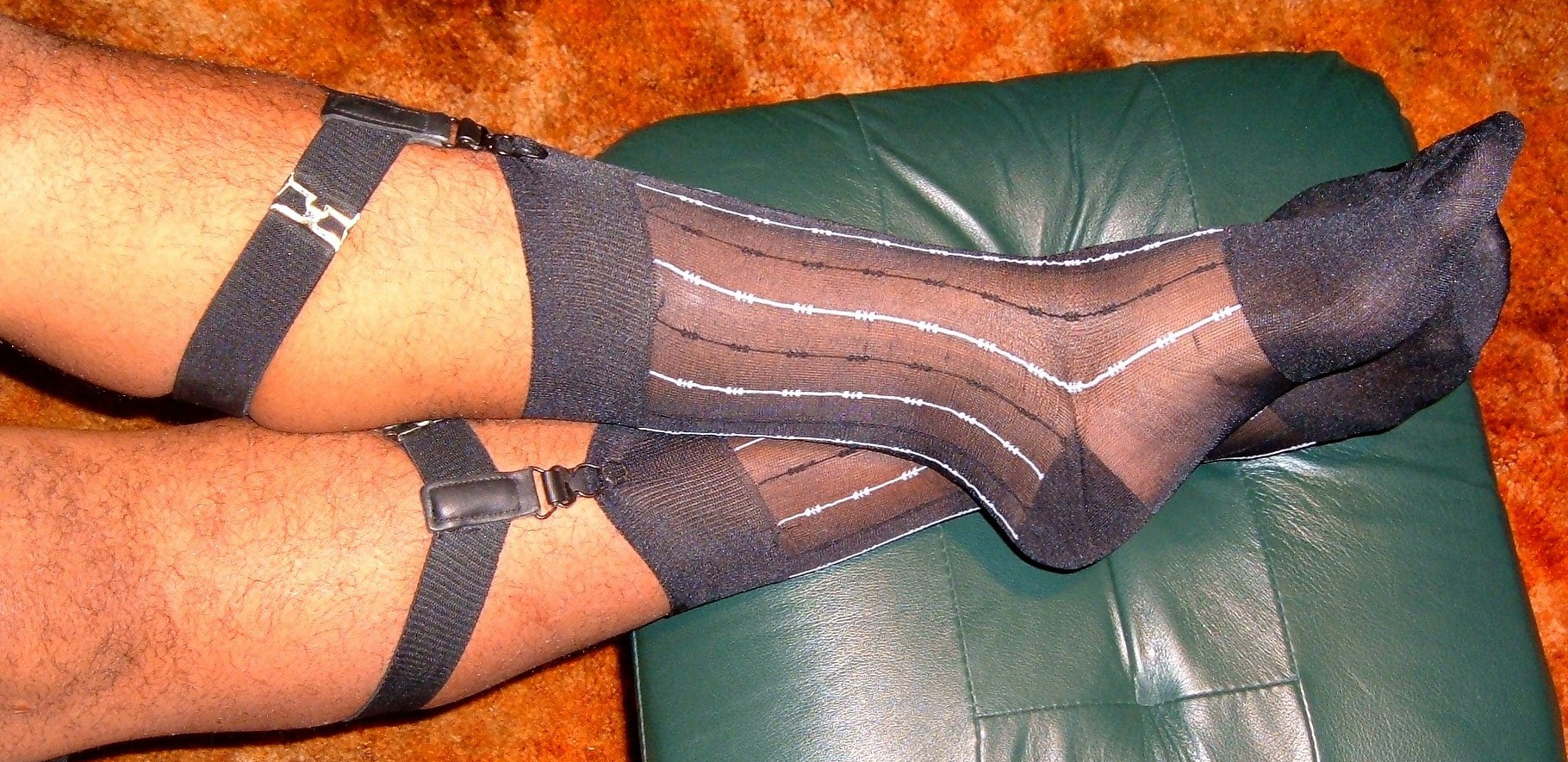
Gentlemen (and lesbians), I do feel we have recourse, desperate though it may be. We have to fight fire with fire. Sort of. I suggest we all take to wearing boxers in public. But not just boxers, my finely-tempered fashion fighting force. Boxers with black socks. Pulled up straight. Preferably with

calf garters

and dress shoes.

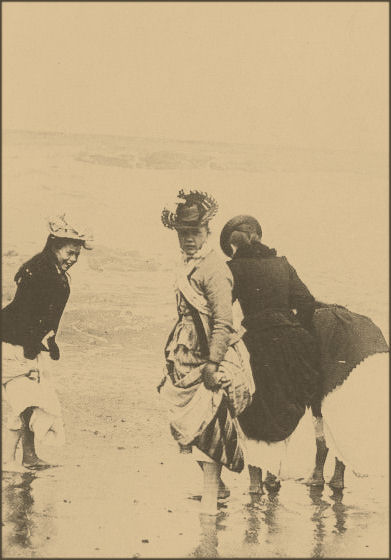
We can not lose! They will bow before our mighty retaliation, cowering in the sight of the most unsightly and awkward antiquated fashion trend the world has yet to know! You think you've got us with your bedroom outfit from the 1980s? How about some 1880s boudoir!

You have been warned, Women of New York. Get out of my T-shirt. Get into some pants.

Oh Man. This is Such the Bad Idea.

A departure for Odin's Aviary, here. I'm not even going to try to relate this to theatre. Over on

As If You Care

, Mr. Younce has issued a meme challenge, and I scoop forth the gauntlet. There is a glorious site called

TV Tropes

that catalogues in a wikish fashion various types and devices from television shows. (I love this because their tropes extend far back into theatre history [Look! I just related it to theatre!], but I am way too apathetic to try and influence the site in that direction.) As a feature on their site, they have a "

story generator

" that gives one new given circumstances every time the page is

refreshed

. So the challenge is to take a random generation of circumstances and devices, preferably the first you get, and create a pilot based on those givens. Try to think of it as relating to my acting work through improvisation or storytelling. That way I'll feel a little less cheap . . .

TV TROPE PILOT

Tropage:

Setting:

Ruritania

Plot:

Prodigal Family

Mandatory Narrative Device:

Road Show

Hero:

Broken Hero

Villain:

Scary Dogmatic Aliens

Mandatory Character As Device:

Camp Gay

Mandatory Trope 1:

Delivery Stork

Mandatory Trope 2:

Unpronounceable Alias

(Optional) Stock Phrase:

Little Did I Know

(Optional) Genre:

Home And Garden

Episodic narrative loosely based on tropifagia (not to be confused with tropophobia)(but, whoa, am I ever a tropophobiac):

Okay: Stay with me here. This show will be called "Setting the Stage" (thanks be to you,

Jason Morningstar

), and will be the first legitimate combination of reality television [Home and Garden] and live theatre. The show would alternate between the two formats between episodes, twice a week, so each week there is a reality TV episode, and a fictional, directed episode. The teaser for each would appear on the other, encouraging people to watch both at least in time to find out what happens on the other next. For the purposes of my take on this meme, this will be a breakdown not of the first episode per se, but the launch of the first season, over several episodes.

The reality is the staff and crew of a smaller-scale, regional theatre, who have shopped in a show by an acting troupe they believe to be incredibly prestigious, though they haven't actually heard of them before. This theatre believes, too, that a documentary is being made about the troupe. Hence, all the cameras. The acting is (again: stay with me here) the troupe. In other words, the troupe will be comprised of television actors

playing

actors in a theatre troupe. The episodes follow the development process for the production, leading up to a convergence of the two groups--the theatre staff and the acting troupe--on production week, whereupon the characters will merge with the real people in the final work of putting up the show. Prior to that week, the interaction between the two groups will largely consist of the director of the troupe [Camp Gay] making increasingly outlandish requests of the set-building crew, costumer, box office, company manager and whatever other theatre staff who have to prepare for their arrival.

The first run of episodes will concern a production of

The Cherry Orchard

[Ruritania], which the theatre will begin preparations for in good faith. They'll be sent regular set and costume plans one might expect for that story, and buzz will be big about how the prestige of this troupe and show will help the theatre get more successful (this is the perpetual state of regional theatres anyway). We'll receive introduction to the people of the theatre, whomever they may be.

Meanwhile, the troupe begins rehearsals, during which the episodes have more to do with what happens outside of rehearsals than in them. Our main character is Peter, the illegitimate son of

Sir Lawrence Olivier

, who is just a terrible actor, but full of the love of theatre that keeps theatre alive. [Broken Hero] The first actor-episode begins with his narration: "Little did I know, when I joined the Mountebank Players, that it would lead to one of the most real experiences of my pretended life." [Little Did I Know] The action focuses on the personal lives of the actors who are playing the more minor roles (Peter plays the Postmaster). As they contend with their director, Phineas Rhett, whose "concept" for the show becomes more and more outlandish, they bounce against one another, falling in love, forging alliances and making life-long enemies. Each character is a development of certain theatrical stereotypes, real and empathetic, but capable of absurd actions.

Meanwhile (back at the Batcave), the natives grow restless. Phineas has continued to make ludicrous requests ("Tell me again why the hell we need a giant X in the middle of the stage?" one of the set painters might complain) and the theatre management is hopefully fairly nervous about how it will all come together. There have been hints about Phineas changing the ending, a prospect that no one is eager to comprehend with regards to such a classic play. We follow the interplay of personal relationships as they get tested by this tug-of-war between hope and fear. I can't write that part; it's up to reality. Meanwhile, a familiar voice has been calling the box office repeatably, asking to be transferred to various departments and asking them about the preparations for the show. No one can figure out who it is, however, and when he's asked, he keeps saying his first name is John and mashing together names from

The Cherry Orchard

for his last name. I.e., John Liubovandreievnaranevskaya. [Unpronounceable Alias]

As we approach production week, the troupe travels to the town the theatre is in [Road Show], and reality and fiction begin to merge as the actors in the troupe (characters) are introduced to the town at large and

the actors playing them have improvisations with random townies

. (Stay. With. Me. Here.) We've established their characters and relationships amongst themselves, and now get to see them interact on the fly with non-actors, both satisfying our understanding of each character and setting up expectation for their coming together with the theatre staff, who we know quite well by now as well. Peter has had all kinds of misfortune--physical injury, overheard comments on his acting, rejection by the woman playing Dunyasha, Irina, whom he has fallen in love with and who refuses to fall for actors--yet he keeps his plucky attitude. He's the one whom even those who despise him turn to for moral support in their various soap-operatic crises.

Finally (I know

I'm

thinking "finally," so I can only imagine what you people are thinking) it comes to production week. The emphasis of coverage is still the interpersonal as the fictional actors interact with the real employees of the theatre, and there's the added twist of a closed-door tech rehearsal policy, and the troupe bringing their own "special effects" supervisor. No one's seen the end of the show.

The season finale is the production itself, liberally interspersed with reaction shots of the audience and theatre staff. Essentially, the troupe begins with a very standard, period production of

The Cherry Orchard

, well constructed and acted. As they continue, however, the play becomes more and more deconstructed until the dialogue begins to sound like . . . well . . . television cliche. In addition, the new bourgeois class (Peter playing such a role) begin exhibiting strange behavior, like wearing towels on their heads and lurching about, zombie-like. [Scary Dogmatic Aliens] If they get to the end of the show (and this being a reality-TV hybrid, who's to say?), we see the ending has indeed been changed. It ends with a white helicopter descending through the ceiling, from which

John Malkovich

(clearly the mysterious caller from previous episodes) emerges, playing Gorbachev and offering to take everyone to Moscow for milk and cookies. [Delivery Stork] All the characters depart, leaving an empty stage and the sound of copter blades threshing cherry trees.

The fall-out from all this is that the theatre is let in on the "real" situation, though they never interact with the actors outside of their characters or anything like that. The theatre is granted a large sum of money (plus allowed to maintain their modifications such as tremendous fly space and a helicopter) and gets to list Malkovich as being a member of their board. Peter realizes through this experience that his love of theatre isn't best met by acting, but by working behind the scenes. Malkovich gets him a job at Steppenwolf (as a sort of "postmaster") and Irina follows him there to act and let herself fall in love with him. This leaves two openings in the Mountebank Players, the which are filled by two aspiring actors from the regional theatre's staff. And next season, they will play themselves or some hybrid thereof, and thr troupe will travel to a different theatre with a different show and a different celebrity will contribute the deus ex machina.

Fin'.

So there's my trope-inspired "pilot." I don't know how I feel about it, except to say that I love working in this format. It reminds me of my theatre sports days, given numerous disparate elements and having to construct something satisfying from them. (The overall satisfaction of this particular assignment is fairly dubious.) This product is, of course, way too elaborate and expensive for a premiere of any kind, much less a pilot or pitch, but I'm pleased with some of the interesting ideas I got to play around with. In so much of my creator/actor (or "

creactor

," as

Friend Nat

coins) work I play with the dimensions between reality and fantasy, and this presented me with some new nooks and crannies. It was a buttery english muffin of a meme.

Good night, and good luck . . .